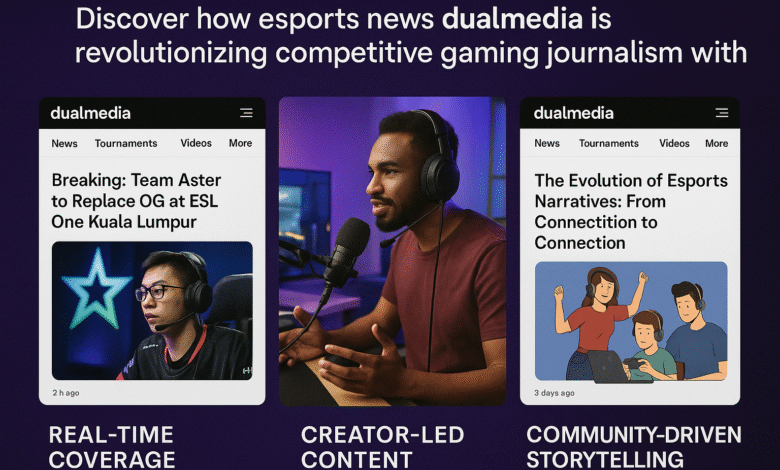
Esports News DualMedia: Shaping the Future of Competitive Gaming Journalism
The esports industry has grown into one of the most dynamic sectors in entertainment, bringing together players, fans, brands, and media outlets in ways unimaginable just a decade ago. With tournaments filling arenas, millions watching live broadcasts, and professional gamers achieving celebrity status, the demand for timely and engaging coverage has never been higher. Yet, traditional journalism has struggled to keep pace with the rapidly evolving nature of competitive gaming. This is where esports news dualmedia comes into play—a transformative model redefining how esports stories are told, shared, and experienced.
In this article, we’ll explore what esports news dualmedia is, how it differs from conventional coverage, its role in the community, and why it is becoming the backbone of modern esports journalism.
The Rise of Esports and the Need for Innovation
Over the past decade, esports has transitioned from small LAN tournaments to billion-dollar global spectacles. Fans no longer just want highlight reels or delayed match summaries; they crave instant access, interactive content, and authentic insights into their favorite teams and players. Traditional reporting alone cannot meet this demand.
Esports news dualmedia emerged as a solution to this gap, blending traditional journalism with digital-first strategies. Instead of focusing only on static articles, this approach integrates video reactions, livestream discussions, social media updates, and community-driven interactions—all working together to provide a real-time and immersive coverage model.
What Is Esports News DualMedia?
At its core, esports news dualmedia is a hybrid style of coverage that combines professional reporting with creator-led commentary. It’s not confined to one medium; instead, it operates across multiple platforms and formats simultaneously. This can include:
-
Articles and in-depth blogs for long-form analysis
-
Short TikTok or Instagram Reels for quick highlights
-
YouTube breakdowns for match strategies
-
Twitter/X threads for live updates
-
Twitch watch parties for interactive discussions
-
Community conversations on Discord and Reddit
The ultimate goal of esports news dualmedia is to deliver speed, engagement, and authenticity. Unlike older models of journalism, which often feel distant and delayed, dualmedia thrives on immediacy and two-way interaction.
Esports News DualMedia vs. Traditional Coverage
The difference between traditional esports journalism and esports news dualmedia can be summed up in a few key points:
| Feature | Traditional Coverage | Esports News DualMedia |
|---|---|---|
| Format | Static articles, delayed interviews | Real-time video, livestreams, social media integration |
| Engagement | Passive reading/viewing | Interactive, community-driven participation |
| Speed | Hours or days after events | Instant reactions and updates |
| Reach | Website-focused | Multi-platform, decentralized ecosystem |
| Tone | Formal, structured | Casual, creator-led, authentic |
This model ensures that esports audiences—who are typically younger, digital-savvy, and socially connected—receive content tailored to their preferences.
The Core Components of Esports News DualMedia
To understand why esports news dualmedia works so well, it’s important to examine its main elements:
1. Multi-Platform Strategy
Every platform has a unique audience, and dualmedia makes sure to cater to them all. TikTok gets quick reactions, YouTube hosts detailed interviews, blogs provide deeper analysis, and Twitch offers real-time engagement. This multiplatform approach ensures no fan feels left out.
2. Real-Time Reactions
Speed is everything in esports. Dualmedia thrives on instant responses, whether it’s AI-generated highlights, creator reaction videos, or post-match discussions that happen minutes after a game ends.
3. Creator-Led Journalism
Fans increasingly trust streamers, analysts, and independent creators more than corporate outlets. Esports news dualmedia empowers creators by giving them platforms, tools, and access to provide firsthand coverage.
4. AI and Automation
From auto-generating summaries to predicting trends, AI plays a crucial role in dualmedia. It enables faster reporting without sacrificing depth or quality.
The Role of Community in Esports News DualMedia
Unlike traditional reporting, which often separates the audience from the newsroom, esports news dualmedia puts the community at the center. Fans become co-creators, not just consumers.
Examples include:
-
Community polls influencing match previews
-
Reddit AMAs evolving into live Q&A sessions
-
Fan-submitted questions shaping interviews
-
Real-time reactions from Discord integrated into broadcasts
This participatory structure makes the content more personal, authentic, and aligned with what fans actually want.
Business and Monetization of DualMedia
The financial side of esports news dualmedia is just as innovative as the content. Instead of relying solely on ads, platforms use creative revenue streams such as:
-
Sponsored creator segments
-
Token-based tipping systems
-
Affiliate partnerships tied to esports products
-
Exclusive, paywalled analysis for premium users
-
NFT collectibles tied to key esports moments
By diversifying income sources, dualmedia platforms create sustainable ecosystems for both creators and fans.
Case Study: DualMedia in Action
To understand how esports news dualmedia works in practice, consider a major Valorant championship:
-
Before Matches: Twitter threads introduce rosters, YouTube shorts provide quick team bios, and Discord Q&A sessions let fans interact with analysts.
-
During Matches: TikTok reactions go live instantly, Twitch hosts newsroom-style watch parties, and AI-generated stats roll out in real time.
-
After Matches: Reddit AMAs feature MVP players, Instagram memes capture viral moments, and long-form recaps appear on blogs.
This kind of comprehensive, platform-spanning coverage attracts millions of fans while driving engagement rates far beyond traditional esports journalism.
Challenges in Esports News DualMedia
Despite its advantages, this model faces certain hurdles:
-
Credibility risks due to creator-driven journalism
-
Platform fragmentation as audiences scatter across apps
-
Revenue inconsistency depending on algorithms and ad policies
-
Content overload where fans may struggle to keep up
However, as AI improves verification systems and monetization methods diversify, many of these challenges are being steadily overcome.
Why Esports News DualMedia Is the Future
The esports industry is projected to surpass $3.5 billion by 2026, and with that growth comes the need for innovative storytelling. Esports news dualmedia isn’t just another trend—it’s the future of gaming journalism. It blends professional reporting with creator-led narratives, bridges the gap between news and entertainment, and transforms fans into active participants in the esports conversation.
More than just covering stories, dualmedia becomes part of the story.
FAQs About Esports News DualMedia
Q1. What is esports news dualmedia?
It’s a hybrid form of journalism combining traditional reporting with creator-led, interactive, and multi-platform content strategies.
Q2. How is esports news dualmedia different from traditional esports coverage?
Unlike delayed, static reports, dualmedia emphasizes real-time updates, interactivity, and community participation across multiple platforms.
Q3. Why is community important in esports news dualmedia?
The community actively shapes coverage through polls, reactions, Q&A sessions, and content creation, making the news more authentic and engaging.
Q4. What role does AI play in esports news dualmedia?
AI helps generate instant highlights, automate match summaries, predict trends, and optimize content distribution.
Q5. Can esports news dualmedia be monetized effectively?
Yes. Through sponsorships, affiliate marketing, fan tipping, NFTs, and premium insights, dualmedia platforms create multiple revenue streams.
Final Thoughts
As esports continues to grow, so too must the ways we tell its stories. Esports news dualmedia is not just an evolution of journalism—it’s a revolution. By combining speed, interactivity, authenticity, and community participation, it is redefining how fans experience the esports world.
Read also:Onbupkfz ESFP Vhaxvr Explained