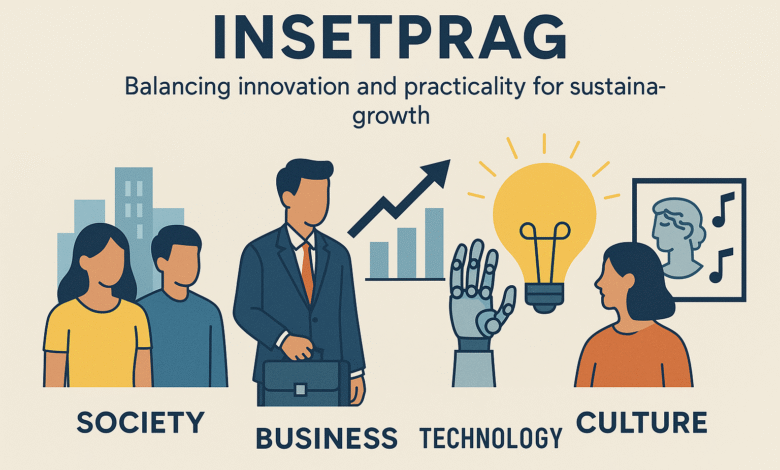
The Impact on Contemporary Society
In today’s fast-changing world, innovation and practicality are two forces that shape industries, lifestyles, and societies. The concept of Insetprag has recently gained attention as a principle that merges creativity with functionality. Rather than being just another trend, Insetprag represents a framework that helps individuals, businesses, and cultures maintain balance between imaginative ideas and workable solutions. By exploring its meaning, applications, and future potential, we can understand how Insetprag influences technology, business, sustainability, and daily life.
Understanding the Origin and Meaning of Insetprag
The word Insetprag combines two important elements:
-
Inset: This represents placement, inclusion, and integration. It emphasizes how new ideas should fit into diverse systems rather than stand apart.
-
Prag: This reflects the pragmatic and practical side of innovation, ensuring solutions are realistic and usable in the real world.
Together, these two elements form a philosophy that prevents concepts from being overly abstract while still remaining adaptable. The strength of Insetprag lies in its ability to blend forward-looking innovation with grounded application.
The Role of Insetprag in Technology
Modern technology thrives on creativity, yet many innovations fail because they are too complex or disconnected from real needs. Insetprag provides a framework to overcome this gap by aligning innovation with human-centered design.
For example:
-
Software developers use Insetprag to design programs that are simple, accessible, and user-friendly.
-
Engineers apply it to build products that are durable yet progressive.
-
Startups adopt Insetprag to expand without losing sight of customer satisfaction.
By encouraging balance, Insetprag helps technology stay relevant, functional, and meaningful in people’s lives.
Insetprag as a Business Strategy
Organizations are increasingly realizing that success depends not only on vision but also on sustainability. Insetprag offers a strategy that blends ambition with reality.
-
Marketing: Creative campaigns are aligned with consumer insights, which leads to stronger customer loyalty.
-
Operations: Efficiency is balanced with innovative upgrades, creating cost-effective solutions.
-
Management: Leaders translate big-picture visions into actionable steps for long-term growth.
Companies that adopt Insetprag avoid the pitfalls of overpromising and underdelivering. Instead, they create realistic plans while continuing to innovate.
Cultural Importance of Insetprag
Beyond technology and business, Insetprag also has cultural relevance. In a world filled with constant trends and shifts, this philosophy reminds societies of the importance of balance.
Examples include:
-
Schools that mix traditional teaching with modern digital tools.
-
Communities that integrate green energy while preserving heritage.
-
Individuals who adopt digital platforms without losing human connections.
By embracing both tradition and innovation, Insetprag fosters a lifestyle of integration rather than extremes.
Insetprag in Problem-Solving
When facing complex issues, people often feel forced to choose between old methods and new ones. Insetprag proposes a hybrid approach that draws from both sides, resulting in more sustainable solutions.
-
Healthcare: Preventive methods are combined with modern medical technologies.
-
Education: Online platforms are used to complement face-to-face teaching.
-
Environmental policies: Cutting-edge technologies are paired with community-driven conservation practices.
This approach not only produces better results but also strengthens resilience across different sectors.
Future Potential of Insetprag
The future looks promising for Insetprag as industries across the globe adopt its principles. From artificial intelligence to sustainability, the framework provides guidance for maintaining balance.
Predictions include:
-
Artificial Intelligence: Insetprag will ensure automation remains a tool that enhances, not replaces, human creativity.
-
Sustainability: Businesses will use it to balance profit with environmental care.
-
Globalization: Cultures will adapt new practices while preserving identity.
This adaptability makes Insetprag an essential guide for the next era of innovation.
Case Study: Insetprag in Sustainable Development
Sustainability is one of the areas where Insetprag shines. Companies often struggle to balance profit and responsibility, but this principle allows both to coexist.
-
A renewable energy firm applied Insetprag by offering affordable solar solutions, increasing adoption in rural areas.
-
A fashion brand merged eco-friendly materials with stylish design, appealing to conscious consumers.
-
A construction company adopted green architecture without raising costs, resulting in efficient and eco-friendly projects.
These examples prove how Insetprag creates practical, effective, and sustainable solutions.
The Human Side of Insetprag
At its heart, Insetprag is not just about efficiency or profits—it is about people. The philosophy focuses on building systems that improve lives rather than complicating them. It highlights values such as comfort, accessibility, and sustainability, ensuring human well-being remains at the center of innovation.
Insetprag is ultimately a bridge between progress and compassion.
Challenges in Implementing Insetprag
Despite its benefits, applying Insetprag is not always easy. Organizations may face hurdles such as:
-
Overemphasizing innovation while neglecting practicality.
-
Relying too heavily on pragmatism, which can restrict creativity.
-
Failing to measure outcomes effectively.
To overcome these issues, leaders must foster a culture that values both vision and realistic execution. Regular evaluation, training, and adaptation also help strengthen implementation.
Conclusion: Why Insetprag Matters Today
In a world where complexity is the norm, Insetprag provides a blueprint for balance. By embedding it in technology, business, culture, and sustainability, societies can enjoy outcomes that are both innovative and sustainable. More than just a concept, Insetprag is a principle that bridges imagination with functionality, offering lasting benefits to individuals, organizations, and communities.
Frequently Asked Questions (FAQs)
Q1. What does Insetprag mean?
Insetprag combines the ideas of integration (“inset”) and practicality (“prag”), highlighting the balance between innovation and usability.
Q2. How is Insetprag applied in technology?
It ensures software, hardware, and digital solutions remain user-centered, practical, and aligned with real human needs.
Q3. Why is Insetprag important for businesses?
Businesses use Insetprag to balance visionary goals with achievable strategies, leading to sustainable growth and stronger customer trust.
Q4. Can Insetprag be used in cultural practices?
Yes, it helps societies integrate modern tools without abandoning traditions, creating a culture of balance and inclusivity.
Q5. What challenges exist in implementing Insetprag?
The main challenges include focusing too much on innovation or being overly pragmatic, both of which can disrupt balance.
Read also:Sparkspitter Candle: A Modern Twist on Classic Candlelight