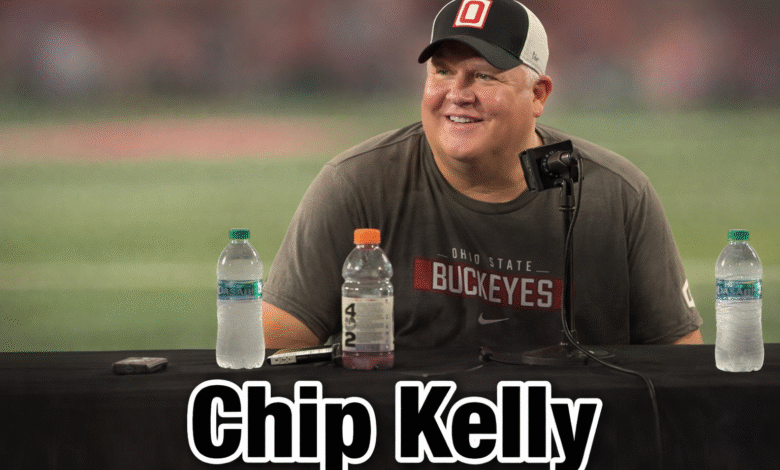
Chip Kelly Biography: The Coach Who Changed the Speed of Modern Football

Introduction
Chip Kelly is one of the most influential American football coaches of the 21st century, widely recognized for popularizing high-tempo, no-huddle offensive systems that transformed how the game is played at both college and professional levels. Rising from modest beginnings in New England, Kelly built his reputation through innovation, discipline, and an unorthodox approach that challenged long-held coaching conventions. His career spans elite college programs and iconic National Football League franchises, making him a central figure in discussions about offensive evolution in football.
Over the years, Chip Kelly has experienced both remarkable highs and well-documented challenges. From national championship contention at Oregon to playoff success in the NFL, and later rebuilding projects at UCLA, his journey reflects the realities of coaching at the sport’s highest levels. What remains consistent is his reputation as a thinker who forced opponents, analysts, and fellow coaches to rethink tempo, preparation, and player conditioning.
Quick Bio: Chip Kelly
| Field | Details |
|---|---|
| Full Name | Charles Edward “Chip” Kelly |
| Date of Birth | November 25, 1963 |
| Age | 62 (as of 2025) |
| Birthplace | Dover, New Hampshire, USA |
| Nationality | American |
| Education | BS in Physical Education, University of New Hampshire |
| Profession | American Football Coach |
| Known For | High-tempo offensive systems |
| Estimated Net Worth | Approx. USD 25 million |
| Primary Income Source | Coaching contracts (college & NFL) |
Early Life, Education, and Start of Career
Chip Kelly was born and raised in Dover, New Hampshire, where he developed a passion for sports at an early age. During high school, he played multiple sports, including football, which laid the foundation for his future career. His athletic background helped shape his later coaching philosophy, particularly his emphasis on conditioning, versatility, and speed.
Kelly attended the University of New Hampshire, earning a Bachelor of Science degree in Physical Education in 1990. Rather than pursuing a professional playing career, he transitioned directly into coaching. His first role came at Columbia University, where he worked as an assistant coach. This early exposure to collegiate coaching allowed him to experiment with ideas and learn the structural demands of the sport from the ground up.
Throughout the 1990s and early 2000s, Kelly held multiple assistant coaching positions, most notably at the University of New Hampshire. These years were crucial in shaping his identity as a coach. He studied offensive efficiency, training science, and game tempo, gradually developing the principles that would later define his teams. By the time he joined the University of Oregon, he was prepared to introduce a system that would soon capture national attention.
Rise to Prominence: Oregon, the NFL, and UCLA
Chip Kelly’s national breakthrough came at the University of Oregon, where he first served as offensive coordinator before being promoted to head coach. At Oregon, his teams became known for relentless pace, rapid play-calling, and explosive scoring. The Ducks consistently ranked among the highest-scoring teams in the country and competed for conference titles and national championships. His success at Oregon cemented his reputation as one of college football’s most innovative minds.
Kelly’s achievements in college football led to his transition to the NFL as head coach of the Philadelphia Eagles. In his first season, he guided the team to a division title, showcasing how his system could succeed at the professional level. Although his NFL tenure included mixed results, his influence on offensive trends—such as increased tempo and simplified reads—remains evident across the league.
After a subsequent NFL role with the San Francisco 49ers, Kelly returned to college football as head coach at UCLA. There, he focused on rebuilding the program, emphasizing development and discipline. His later move to a coordinator role at a major college program and a return to the NFL as an offensive coordinator further demonstrated his adaptability. While not every chapter ended in sustained success, Kelly’s career reflects persistence and a willingness to evolve.
Legacy, Impact, and Latest Developments
Chip Kelly’s legacy is defined less by win-loss records and more by lasting influence. His offensive philosophy reshaped how teams think about tempo, preparation, and player workload. Many concepts that were once considered radical—such as no-huddle offenses and simplified playbooks—are now standard across college football and increasingly common in the NFL.
Financially, Kelly has been among the highest-earning coaches of his generation, with income primarily derived from coaching contracts at elite programs and professional franchises. His estimated net worth reflects decades at the top levels of the sport, though exact figures vary by source. Importantly, Kelly has maintained a relatively private personal life, choosing to keep family and personal matters out of the public spotlight.
In recent years, Kelly has continued to be part of high-level football discussions, whether through coaching roles or speculation about future opportunities. Regardless of his next step, his imprint on modern football strategy is secure. Coaches, analysts, and players alike acknowledge that the game looks different today because of the ideas Chip Kelly brought into the mainstream.
Frequently Asked Questions (FAQ)
Q1: What is Chip Kelly best known for?
He is best known for pioneering high-tempo, no-huddle offensive systems that transformed modern football strategy.
Q2: Has Chip Kelly won a national championship?
As a head coach, he led teams to major championship games and conference titles, though he did not win a national title as a head coach.
Q3: Did Chip Kelly succeed in the NFL?
His NFL career had mixed results, including a division title with the Philadelphia Eagles and shorter tenures with other teams.
Q4: What is Chip Kelly’s estimated net worth?
Industry estimates place his net worth at approximately USD 25 million, primarily from coaching contracts.
Q5: Is Chip Kelly still coaching?
As of recent seasons, he has continued to work in high-level coaching roles, including coordinator positions, and remains active in football circles.