Assimilasjon Explained: Culture, Identity, and Integration

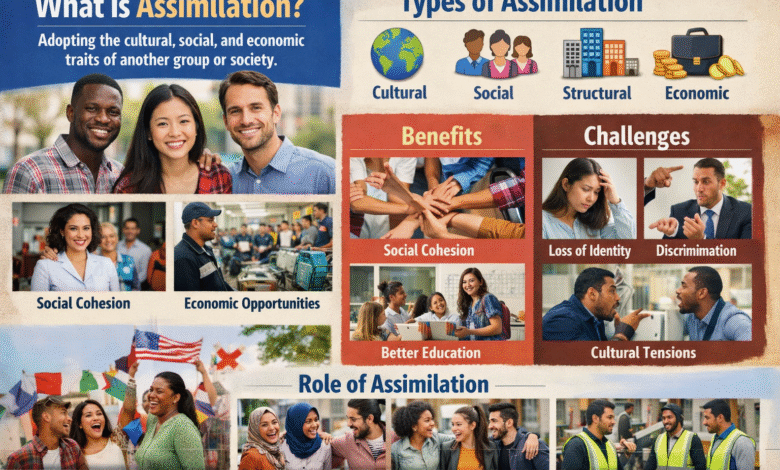
Table of Contents
ToggleIntroduction to Assimilasjon
Assimilasjon is a fundamental social and cultural process that describes how individuals or groups gradually adopt the norms, values, behaviors, and practices of a dominant or host society. In a world shaped by migration, globalization, and cross-cultural interaction, assimilasjon has become increasingly relevant. Whether it involves immigrants settling into a new country, minorities adapting to mainstream culture, or societies evolving through shared values, assimilasjon plays a powerful role in shaping identities and communities. Understanding assimilasjon helps explain how people integrate into new environments while navigating belonging, identity, and cultural continuity.
The Meaning of Assimilasjon in Today’s World
At its core, assimilasjon refers to the process of becoming similar to the dominant culture within a society. This similarity may appear in language use, social behavior, cultural traditions, or shared values. In modern societies, assimilasjon is not always forced or immediate; instead, it often occurs gradually through daily interaction, education, and participation in social systems. Assimilasjon allows individuals to function effectively within a society while contributing to social harmony and cohesion. As societies become more diverse, the meaning of assimilasjon continues to evolve.
Historical Background of Assimilasjon
Assimilasjon is not a new concept. Throughout history, human migration, trade, conquest, and cultural exchange have led to natural forms of assimilasjon. Ancient civilizations expanded by integrating new populations, often blending traditions over generations. However, history also shows periods where assimilasjon was enforced, resulting in the loss of indigenous cultures and languages. In contrast, modern assimilasjon is more frequently voluntary, driven by opportunities for education, employment, and social mobility. Learning from history helps societies adopt more ethical and inclusive approaches to assimilasjon today.
Cultural Assimilasjon and Identity
Cultural assimilasjon occurs when individuals adopt cultural elements such as clothing styles, food habits, customs, social etiquette, and celebrations of the host society. Over time, this can lead to identity transformation, especially for immigrants and their descendants. While cultural assimilasjon can promote acceptance and reduce social barriers, it may also create tension when individuals feel pressured to abandon their heritage. Many people experience a blended identity, where original traditions coexist with new cultural influences. This balanced form of assimilasjon often results in richer, more dynamic cultures.
Language and Assimilasjon
Language plays a critical role in assimilasjon. Mastering the dominant language of a society enables individuals to communicate, gain employment, access education, and participate fully in public life. Language assimilasjon is often encouraged through schools, media, and workplace environments because it strengthens social connection. However, losing a native language can weaken cultural ties within families and communities. Healthy assimilasjon promotes learning the dominant language while respecting linguistic diversity, allowing multiple languages to coexist.
Social Assimilasjon and Community Integration
Social assimilasjon focuses on interpersonal relationships and community participation. This includes forming friendships, joining social networks, attending public events, and sharing common social values. Social assimilasjon often develops slowly, influenced by everyday interactions and mutual acceptance. When individuals feel socially included, their sense of belonging increases, reducing isolation and cultural division. Strong social assimilasjon contributes to trust, cooperation, and shared identity within communities.
Economic Assimilasjon and Opportunity
Economic assimilasjon refers to the ability of individuals to integrate into the economic system of a society. This includes gaining employment, understanding workplace norms, pursuing education, and achieving financial stability. Successful economic assimilasjon benefits both individuals and host societies by increasing productivity and reducing inequality. Governments and institutions often support economic assimilasjon through training programs, job placement services, and educational opportunities. Economic stability plays a vital role in long-term social integration.
Psychological Aspects of Assimilasjon
Psychological assimilasjon involves internal adjustment to a new cultural environment. Individuals may experience emotional challenges such as homesickness, identity confusion, or cultural stress during the process. Adapting mentally requires flexibility, resilience, and emotional support. Over time, psychological assimilasjon can lead to personal growth, confidence, and a stronger sense of self. Emotional well-being is essential for healthy assimilasjon, as mental balance supports positive social and cultural adaptation.
Factors That Influence Assimilasjon
Several factors shape the process of assimilasjon. Age is a significant influence, as younger individuals often adapt more quickly to new languages and cultural norms. Education accelerates assimilasjon by exposing individuals to shared values and social systems. Social environment, community acceptance, and cultural openness also play major roles. Additionally, government policies that promote inclusion and equal opportunity greatly affect how smoothly assimilasjon occurs. Supportive conditions make the process more positive and effective.
Benefits of Assimilasjon
Assimilasjon offers numerous benefits for both individuals and societies. For individuals, it increases access to education, employment, healthcare, and social networks. It also fosters a sense of belonging and security. For societies, assimilasjon strengthens unity, reduces social conflict, and encourages cooperation. When approached respectfully, assimilasjon promotes cultural exchange rather than cultural loss, allowing communities to grow together.
Challenges and Criticism of Assimilasjon
Despite its benefits, assimilasjon is not without controversy. Critics argue that it can pressure individuals to abandon their cultural identity. Others believe that excessive focus on assimilasjon weakens cultural diversity and reinforces inequality. These concerns highlight the importance of balanced assimilasjon—one that encourages integration without forcing uniformity. Respecting heritage while promoting shared values is essential for fair and sustainable social development.
Assimilasjon Versus Multiculturalism
Assimilasjon is often compared with multiculturalism. While assimilasjon emphasizes integration into a shared culture, multiculturalism supports the coexistence of multiple cultures without requiring blending. Each approach has advantages: assimilasjon promotes social cohesion, while multiculturalism preserves diversity. Many modern societies adopt a hybrid approach, encouraging assimilasjon in civic life while respecting cultural uniqueness.
The Role of Assimilasjon in Global Migration
Global migration has made assimilasjon a central issue worldwide. As people move across borders for safety, education, or economic opportunity, societies must address integration effectively. Successful assimilasjon policies help migrants feel accepted while maintaining social stability. When managed thoughtfully, assimilasjon supports peaceful coexistence in increasingly diverse societies.
The Future of Assimilasjon
As technology, communication, and mobility continue to evolve, assimilasjon will also change. Future models may focus on flexible integration, where individuals maintain cultural identity while participating fully in shared social systems. Understanding assimilasjon will remain crucial for building inclusive, connected, and resilient societies in a globalized world.
Conclusion
Assimilasjon is a complex yet essential process that influences cultural, social, economic, and psychological dimensions of life. It shapes how individuals adapt, how communities grow, and how societies maintain harmony. When practiced with balance and respect, assimilasjon strengthens unity without erasing diversity. As global interactions increase, the ability to integrate while preserving identity will define the future of social cohesion.
FAQs
1. What is assimilasjon?
Assimilasjon is the process through which individuals or groups adopt the norms, values, and behaviors of a dominant society.
2. Why is assimilasjon important?
Assimilasjon supports social unity, economic participation, and community belonging.
3. Is assimilasjon always voluntary?
In modern societies, assimilasjon is mostly voluntary, though historical examples include forced assimilasjon.
4. Can assimilasjon coexist with cultural identity?
Yes, balanced assimilasjon allows individuals to integrate while preserving their cultural heritage.
5. How can societies support healthy assimilasjon?
Through inclusive policies, education, language support, and respectful cultural exchange.