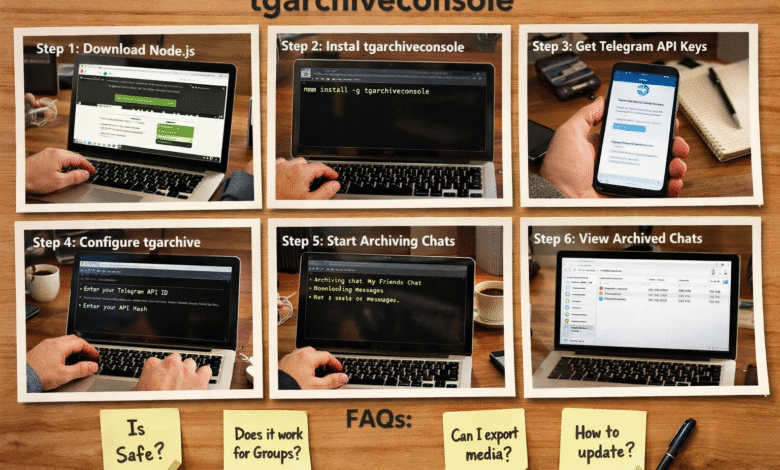
In today’s fast-moving digital world, managing your Telegram conversations can quickly become overwhelming. Whether you use Telegram for work, community management, or personal record-keeping, keeping your chats organized is essential. This is where tgarchiveconsole set up comes in—a practical solution that transforms fast-flowing Telegram messages into a structured, searchable archive you control completely.
With tgarchiveconsole set up, you can create a reliable system for storing and accessing your chat history, making it easier to refer back to important conversations, perform audits, or simply keep a personal record of your digital interactions.
What Is TGArchiveConsole and Why You Should Archive Telegram
TGArchiveConsole is a command-line tool designed to help you archive Telegram messages from personal chats, groups, and channels into formats that you can store and manage. Unlike Telegram’s default environment, which focuses on instant messaging speed, this tool ensures long-term safety and accessibility of your messages.
Archiving your Telegram conversations is essential for several reasons:
-
Data security: Protect yourself from accidental deletion, lost devices, or account issues.
-
Research and analysis: Easily access past conversations for research, audits, or project tracking.
-
Organization: Keep your digital communications structured instead of scrolling endlessly.
With tgarchiveconsole set up, Telegram archiving becomes a repeatable process rather than a one-time manual export, giving you full control over your data and storage.
System Requirements and Preparation
Before beginning tgarchiveconsole set up, it’s important to ensure your system meets the necessary requirements. You don’t need a high-end server, but your setup should include:
-
A modern operating system with terminal or command-line access.
-
Stable internet connectivity to interact with Telegram servers.
-
Sufficient storage space to accommodate archives, including media-heavy chats.
If you follow busy channels or groups, such as community forums or large project discussions, be prepared for your archives to grow significantly in size. High-resolution images, videos, and voice messages can quickly consume gigabytes of storage.
Decide in advance where your archives will be stored—local disks, external drives, or network storage—and include that location in your regular backup routines to prevent accidental data loss.
Getting Your Telegram API Ready
A key part of tgarchiveconsole set up is connecting to Telegram through official developer access. This requires generating API credentials:
-
Visit the Telegram Developer Portal.
-
Register a new application.
-
Note your API ID and API hash.
These credentials allow TGArchiveConsole to export your chat history securely. Treat this information like a password—keep it private and do not share screenshots or upload it to public repositories. Proper handling of API credentials is essential to maintaining account security during tgarchiveconsole set up.
Step-by-Step Guide to TGArchiveConsole Set Up
Here’s a detailed, beginner-friendly guide to get tgarchiveconsole set up on your system:
1. Install and Test the Console
Begin by downloading the latest TGArchiveConsole release from its official source. Follow installation instructions for your operating system. Once installed, open your terminal and run the basic command or the --help flag to confirm the program is working correctly.
If the console responds with usage information without errors, your system is ready for Telegram integration. This step ensures a smooth tgarchiveconsole set up process.
2. Connect TGArchiveConsole to Telegram
Next, launch TGArchiveConsole and enter the phone number associated with your Telegram account. The tool will request a one-time login code sent via Telegram. Enter this code in the console to establish a secure session.
Once paired, tgarchiveconsole set up allows the tool to export chat history from all permitted accounts, groups, and channels while complying with Telegram’s policies for third-party tools.
3. Select Conversations and Storage Location
After connecting to Telegram, decide which chats, groups, or channels are important enough to archive. Many users begin by creating a targeted archive for work-related groups, project channels, or long-running community discussions.
Choose the folder or storage medium where your archives will reside. After a test run, verify that the exported conversations match your Telegram app in terms of message content and date range. This step ensures your tgarchiveconsole set up is both accurate and reliable.
Routine Use, Updates, and Reliability
To maximize the benefits of tgarchiveconsole set up, it’s important to use it regularly. Establish a schedule—daily, weekly, or monthly—based on your chat activity and business needs. Document who is responsible for monitoring the archives to ensure consistency.
Updating TGArchiveConsole safely is also crucial:
-
Backup your existing configurations and archive folders.
-
Download the latest release from the official source.
-
Replace program files following the release instructions.
-
Run a test archive on a non-critical chat to verify functionality.
Treat tgarchiveconsole set up as part of your digital infrastructure: maintain permissions, monitor disk space, and verify that new conversations are being captured consistently. For teams, provide a simple internal guide so multiple users can manage archives efficiently.
Conclusion
TGArchiveConsole set up transforms Telegram from a fast-scrolling messaging platform into a structured knowledge base. By preparing your system, setting up developer access securely, and following a routine for use and updates, you can maintain a reliable, long-term record of the conversations that matter most.
This tool removes the headache of manual exports or screenshot-based backups, giving you predictable and secure access to your Telegram history.
FAQs
Q1. Can TGArchiveConsole run on low-power devices like home servers?
Yes. As long as your device meets the tool’s system and storage requirements, it can handle tgarchiveconsole set up.
Q2. Does TGArchiveConsole store my Telegram password or login code?
No. It relies on Telegram’s secure login flow and stores only a temporary session token.
Q3. How often should I run TGArchiveConsole for best results?
This depends on chat activity. Busy channels may require daily or weekly runs, while personal or low-activity chats can be archived monthly.
Q4. Can I archive media files using TGArchiveConsole?
Yes. The tool captures all message types, including images, videos, and voice notes, as long as you have sufficient storage.
Q5. Is TGArchiveConsole compatible with all Telegram accounts?
Yes, as long as you have valid Telegram API credentials, you can archive chats from personal accounts, groups, and channels within the limits set by Telegram.