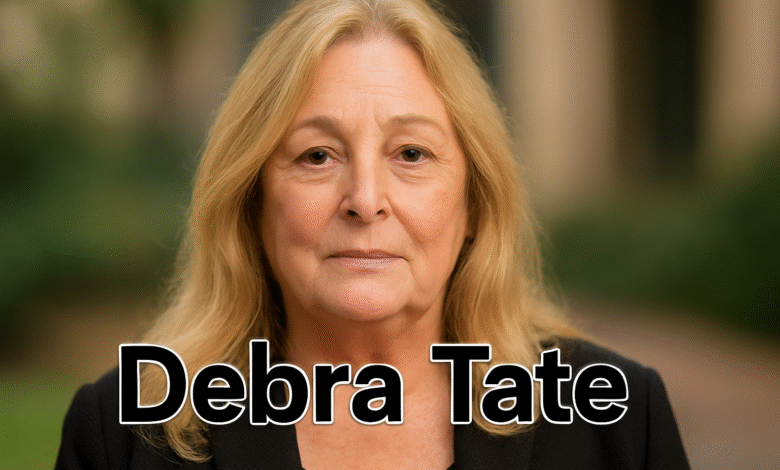
Debra Tate: A Relentless Voice for Justice, Memory & Resilience
How the younger sister of Sharon Tate turned personal tragedy into lasting advocacy

Quick Bio
| Attribute | Details |
|---|---|
| Full Name | Debra Tate |
| Date of Birth | November 6, 1952 |
| Place of Birth | El Paso, Texas, USA |
| Nationality | American |
| Known For | Victims’-rights advocacy, sister of Sharon Tate |
| Key Work | Preserving legacy of the 1969 murders, public advocacy |
Introduction
The name Debra Tate may not be widely known outside true crime or Hollywood circles, yet her story is powerful, gravely significant, and inherently human. As the younger sister of actress Sharon Tate, whose 1969 murder shocked the world, Debra’s life has been deeply marked by tragedy. But rather than allow that trauma to define her passively, she chose to channel pain into purpose. In this article, we explore Debra Tate’s early life, her transformation into an advocate for victims’ rights, her ongoing legacy, and how her story offers both caution and inspiration. The keywords “Debra Tate” and related phrases will guide this discussion for both clarity and search visibility.
Early Life and Background
Debra Tate was born on November 6, 1952 in El Paso, Texas. She grew up in a military family, her father Paul James Tate serving as a U.S. Army intelligence officer, which meant the family moved frequently and Debra experienced a childhood of relocations and instability. Her mother, Doris Gwendolyn Tate (née Willett), later became a prominent victims’ rights advocate after Sharon’s murder.
Her older sister Sharon gained Hollywood prominence and tragically was murdered in August 1969, an event that would shape the rest of Debra’s life. At around age 17, Debra confronted the reality of her sister’s murder and subsequently would become a key voice in fighting for accountability and memory of that crime.
Turning Point: The 1969 Murder and its Impact
The murder of Sharon Tate by members of the Manson Family in 1969 reverberated beyond Hollywood—into the halls of justice, into victim advocacy, and into the lives of families like the Tate family. For Debra, this was not only the loss of a beloved sister but the beginning of a lifelong commitment. She has spoken publicly about being haunted by the event and the need to keep the story alive. Her fight has been two-fold: to protect the memory of Sharon and to ensure that the rights and voices of victims (and families of victims) are not forgotten in the criminal justice-system.
In interviews, Debra has emphasized that the killers of her sister were not mere products of “hippie chaos,” but individuals who made deliberate choices—and she has pressed for continued accountability. Her advocacy is grounded not only in grief but in a sustained sense of moral purpose.
Advocacy and Public Role
Over the years, Debra Tate has worn many hats: speaker, author, witness, guardian of memory. She opposes parole for members of the Manson Family and attends parole hearings, reflecting her role as a persistent advocate for victims’ families within the justice system. In 2019 and beyond, she was featured in major media outlets discussing how the trauma of her sister’s death continues to shape her life.
Additionally, she published a book (her authorship is documented) that focuses on her sister Sharon’s life rather than only the murder. Through that work, she seeks to shift the narrative: Sharon Tate was more than a victim—she was a person, an actress, a friend, and a sister. Debra’s use of public platforms—interviews, speaking engagements, book publishing—has allowed her to sustain that counter-narrative and deepen awareness of victims’ rights.
Challenges and The Fight for Justice
While Debra Tate’s work is deeply purposeful, it is not without challenges. Living with the legacy of a high-profile murder means dealing with media sensationalism, public curiosity, and the emotional toll of the past. She has openly admitted that she “lives with it every day”—the memory of her sister’s murder, the ongoing parole hearings, and the burden of advocacy.
Her fight is also against systemic obstacles: the justice system’s treatment of victims’ families, the complexity of parole and clemency, and the cultural drift toward sensationalism rather than dignity. In many ways, Debra has become a symbol of resilience—of the personal becoming public, of grief becoming action—but the weight of that symbol is real.
Legacy & Significance
The legacy of Debra Tate is multifaceted. On the one hand, she ensures that Sharon Tate’s life remains more than a tragic footnote in true-crime history. On the other, she stands as a voice for families and victims of violent crime who often feel invisible. Her work raises important questions: How do we honour victims without turning them into spectacles? How do we support families long after the headlines fade?
Moreover, Debra’s story has a broader cultural relevance. The murders of 1969 symbolised the dark end of the 1960s idealism and the still-unresolved tension between fame, violence, justice, and memory. Debra has remained a conscientious keeper of that narrative—and by doing so she contributes to the historical, legal, and moral conversation about crime, punishment, memory, and human dignity.
Conclusion
Debra Tate’s life is both a testament to loss and to endurance. She emerged from one of the most infamous murders in U.S. history not simply as a victim’s sister, but as a seasoned advocate, an author of memory, and a persistent voice in the fight for victims’ rights. While pain and injustice marked her early years, she chose purpose. Her story reminds us that tragedy does not have to mean silence—and that justice, memory, and dignity are ongoing processes, not one-time events. In honouring the memory of Sharon Tate, Debra also honours the lives of countless victims and shines a light on the human cost of crime—and the human potential of response.
FAQs
Q1: Who is Debra Tate?
Debra Tate is the younger sister of actress Sharon Tate, born November 6, 1952 in El Paso, Texas. She has become a prominent advocate for victims’ rights and the preservation of her sister’s legacy.
Q2: What major event shaped Debra Tate’s advocacy?
The brutal murder of Sharon Tate in 1969 by members of the Manson Family deeply affected Debra. She subsequently committed to ensuring that victims’ families hold a voice in the justice system and that her sister’s life is remembered beyond the crime.
Q3: Has Debra Tate written any books?
Yes—she is credited with a book focused on Sharon Tate’s life and legacy rather than solely on the murder event. Her authorship is documented in public records.
Q4: What kind of advocacy does Debra Tate engage in?
She participates in parole hearings, publicly opposes releases of convicted killers, speaks about victims’ rights, and works to shift cultural narratives so that victims are treated with dignity rather than sensationalism.
Q5: Why is Debra Tate’s story important today?
Her story intersects justice, memory, celebrity, violence, and victims’ rights. It offers lessons about how families respond to trauma, how public systems engage with crime victims, and how society remembers lives rather than only events.